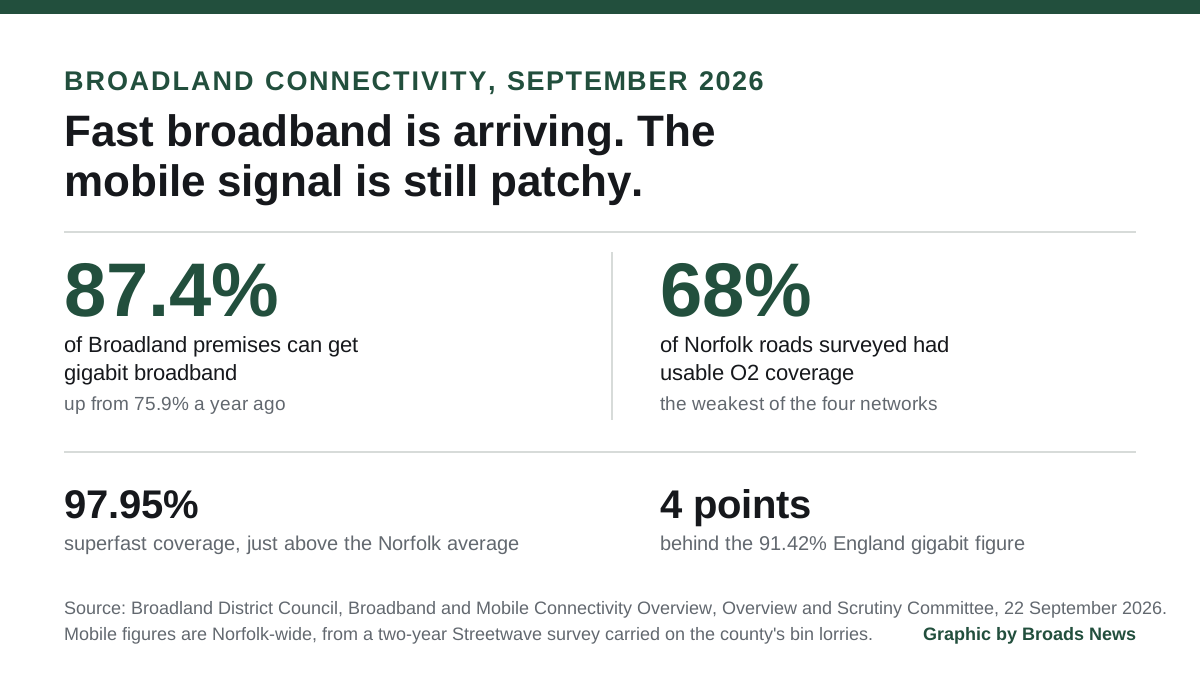

Gigabit broadband now reaches 87.4% of Broadland premises, up nearly 12 points in a year. A bin lorry survey found O2 usable on 68% of Norfolk roads.
Gigabit broadband now reaches 87.4% of premises in Broadland, up from 75.88% a year ago. That puts the district well ahead of Norfolk as a whole, and still four points behind England.
The figures are in a connectivity report going to Broadland District Council’s Overview and Scrutiny Committee at 6.30pm today, Tuesday 22 September, at the Horizon Centre on Broadland Business Park.
It is the mobile half of the report that residents will recognise.
The broadband numbers
The report sets out where the district stands:
- 87.4% of Broadland premises can get gigabit capable broadband. Norfolk’s figure is 80.1% and the national figure is 91.42%.
- A year ago the Broadland figure was 75.88%. That is a rise of nearly 12 percentage points, faster than the England average over the same period.
- 97.95% of premises can get superfast broadband, just above the Norfolk average of 97.68% in July 2026.
- Across Norfolk, superfast coverage has gone from 42% in 2012 to 97.68% today.
Most of that came from Better Broadband for Norfolk, the county programme that finished in October 2024. The council credits it with reaching more than 200,000 premises across Norfolk.
Bin lorries measured the mobile signal
Norfolk County Council has just finished a two-year mobile coverage survey run by a company called Streetwave. The method is the interesting part. Streetwave fitted the county’s bin lorries, including those working in Broadland, and used them to measure real mobile performance on most of the roads where people live, work and travel.
The results are for Norfolk as a whole rather than Broadland alone. They measure basic coverage, meaning a signal good enough for calls, messaging and basic web browsing.
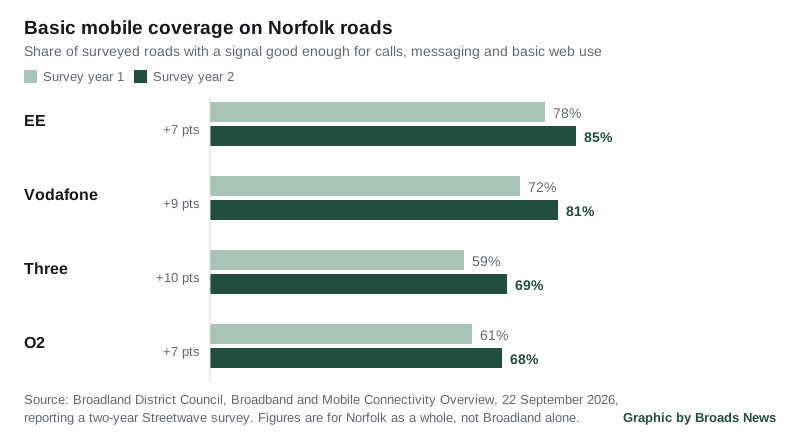
Every network improved, and Three improved most. But on O2 and Three, roughly three in ten of the roads surveyed still had no usable signal in the second year.
The council adds a pointed line about the official picture. The survey results are “still below the coverage stats reported by OFCOM”, and Norfolk County Council “continues to challenge OFCOM and the mobile network operators to provide accurate coverage information to the public”.
47,000 Norfolk premises were cut from the fibre contract
The next phase of fibre in Norfolk runs through the government’s Project Gigabit scheme. The report records what happened to it, and the numbers are large.
- The Norfolk Project Gigabit contract was awarded to CityFibre in 2023, to reach 80,000 premises.
- It was revised in May 2026, cutting the initial delivery to about 33,000 premises.
- That removed roughly 47,000 premises from the CityFibre build.
Broadland came off lightly. The report says the district “was already in the build phase, so was not significantly impacted by the reduction”.
The 47,000 have not been abandoned. Where they still qualify for public subsidy, they are expected to move into a new Project Gigabit Type C procurement, which would let Openreach and other suppliers bid to build there instead. No date is given for that.
What the council says is still hard
The report is candid about the gaps that money has not closed:
- Rural and dispersed premises. The homes, farms and small businesses still on slow broadband are the most expensive and complex to reach.
- Mobile reliability. Coverage maps “do not always reflect lived experience”. Indoor coverage, call reliability, seasonal visitor demand and differences between operators all remain issues.
- 5G. It is concentrated in and around larger settlements and transport corridors, with limited reach in rural parts of the district. Rural rollout is slowed by commercial viability, power and backhaul, the availability of mast sites and planning constraints.
- The Shared Rural Network. The national programme meant to fix rural 4G has, in the council’s words, given Norfolk “limited benefit”.
- Digital exclusion. Affordability, confidence, skills and device access stop people benefiting even where the infrastructure arrives.
Norfolk County Council has also put satellite connectivity into selected rural community sites, including village halls, where fibre would take longer to arrive.
The report adds one more brake that Broadland drivers will already have noticed: streetworks, wayleaves and planning permissions all affect how fast the cables go in. The county’s current closures, including the CityFibre job at Blofield, are on our roadworks and travel page.
What it means for you
If your broadband is slow, the odds have shifted in your favour: almost nine in ten Broadland premises can now order a gigabit service, and many households on an older connection have not checked since the fibre arrived in their street. It is worth re-testing your address with your provider.
If your problem is the mobile signal, the report confirms what the coverage maps do not: which network you are on matters more here than it should. The gap between the best and worst performing network on Norfolk roads was 17 percentage points in the second survey year.
The council also flags two changes coming that will catch people out. The landline digital switchover and the closure of older mobile networks both affect alarms and telecare equipment used by vulnerable residents. If someone in your household relies on a pendant alarm or a monitored care line, that is worth raising with the supplier now.
The committee is asked only to note the report. Papers are on the council’s meeting page, and members of the public can speak at the start of the meeting.
Sources
- Broadland District Council, Broadband and Mobile Connectivity Overview, Overview and Scrutiny Committee, 22 September 2026, for every figure in this article: the 87.4%, 80.1% and 91.42% gigabit figures, the 75.88% figure for a year earlier, the 97.95% and 97.68% superfast figures, the 42% figure for Norfolk in 2012, the Streetwave survey table, the Project Gigabit contract numbers and the list of remaining challenges.
- Broadland Overview and Scrutiny Committee, 22 September 2026 for the agenda, the venue and the meeting time.
Have your say